What is Customer Experience (And Why is it No Longer Optional)?
- Sarah Clearwater
- 12 minutes ago
- 4 min read

Key Takeaways
As organisations grow, decision-makers move further away from customers, making CX a strategic necessity, not an operational afterthought.
Customer Experience (CX) is not customer service — it is every interaction across the full customer journey, from discovery to exit.
70% of business transformations fail because they are not designed with the customer or end user in mind.
Customer journey mapping helps leaders replace assumptions with evidence and align decision-making across teams.
Silos between marketing, sales, product, and customer success create fragmented experiences and lost revenue.
B2B and B2C journeys are fundamentally different and require different design approaches.
The most effective CX strategies focus on the “moments that matter” across the journey, not just visible touchpoints.
In 2026, one thing is clear: customer experience (CX) is no longer a “nice to have.” It’s a core business strategy.
Yet most organisations are still getting it wrong. Not because they don’t care. But because they’re designing businesses around systems, silos, and assumptions… instead of people.
Let’s unpack what’s really going on and how to shift it.
The Growing Gap Between Decisions and Reality
As organisations grow, something subtle—but critical—happens: Decision-making moves further away from the customer. Layer by layer, hierarchy creates distance, and with that distance comes risk:
Decisions are made without real customer context
Assumptions replace evidence
Internal priorities override real-world needs
At the same time, customer expectations are accelerating faster than ever. So businesses are facing a double challenge:
More distance from customers
Faster-changing expectations
This is why CX has shifted from a “nice to have” to a strategic necessity.
Customer Experience vs Customer Service (They’re Not the Same)
Customer service is one part of the journey. CX is every interaction a person has with your business — across every touchpoint. That includes:
How customers find you;
How they buy;
How they use your product or service;
How they leave (or stay).
CX impacts every part of a business, from technology platforms to processes, systems, and communication. Customer service is just one moment inside that broader system.
The Hidden Cost of Ignoring CX
When organisations design change without considering the customer or end user, they lose control of outcomes. Around 70% of digital and business transformations fail to deliver their intended results, representing hundreds of billions in wasted investment globally.
The cause is rarely technology or capability. It is this: The customer (and user) was never properly considered in the design of the change. In many cases:
A brief is written internally
A solution is selected
A system is implemented
But the real users — customers or employees — were never deeply understood
This is one of the biggest drivers of transformation failure: lack of user-centred design from the start.
The Real Power of Customer Journey Thinking
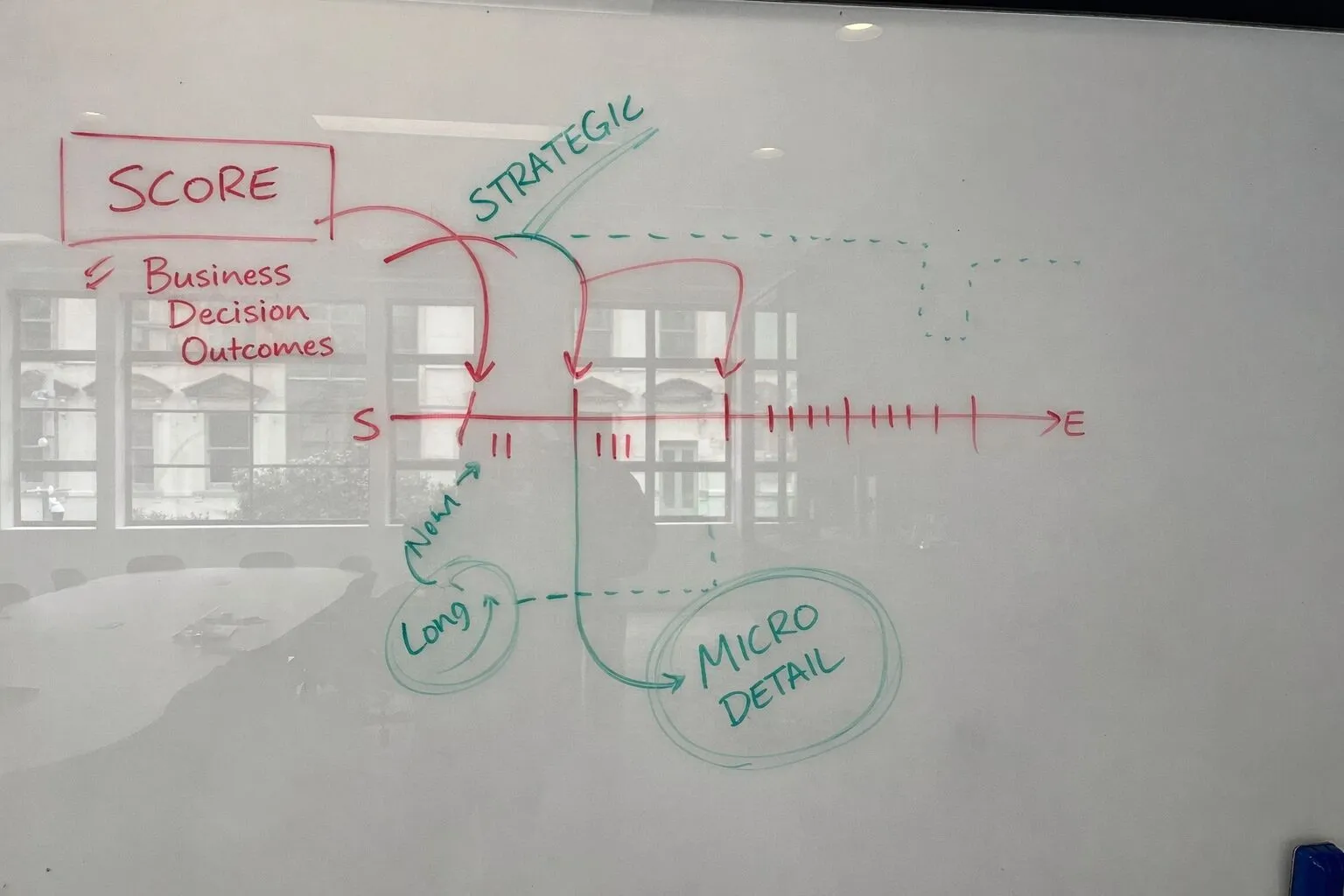
Customer journey mapping isn’t just a workshop exercise. Done properly, it becomes a strategic alignment tool.
Most leaders rely on experience, partial data, and what has worked before. That is normal — but incomplete. The problem is not a lack of data. It is a lack of context.
Customer journey mapping bridges that gap by showing:
What customers actually do (not what we assume)
Where friction exists across the journey
How decisions in one area impact another
Where opportunities are being lost
It creates three critical outcomes:
Visibility — what is really happening
Alignment — how teams and decisions connect
Decision clarity — leaders shift from intuition to evidence
The Silo Problem (And Why It Kills Experience)
Every department has its own goals:
Marketing optimises for fit and interest. Clicks. Downloads. Engagement.
Sales optimise for conversion. Budget. Authority. Timing. Is this person ready to buy?
Product wants to add more features.
Onboarding optimises for activation and time to ROI. How quickly and easily a customer can get value from what they've purchased.
Each team is doing what they're incentivised to do, but they're optimising for different outcomes. Individually, they make sense. But collectively, this creates a disjointed customer journey.
What’s usually missing is the connection between department activity and journey outcomes, and even more importantly, the handoff between departments where information often gets lost or distorted.
The result? Friction. Frustration. Lost revenue.
The unlock? Getting in the same room with different departments that touch the same part of the journey and mapping it together.
In the context of the acquisition journey, for example, that’s often your marketing, sales, and customer success teams. That's when the blame stops, and the real gaps become visible.
B vs B2C: Why the Same Playbook Doesn’t Work?
The vast majority of marketing and sales best practices come from a B2C experience. But B2B and B2C are fundamentally different.
B2C is typically:
Faster
Transactional
Individual decision-making
B2B is:
Longer (often 6–18 month cycles)
Multi-stakeholder
Relationship and trust-driven
If you apply speed-focused B2C tactics to B2B, you will break the pipeline. So, we can’t apply the same playbook. Different contexts require different design.
For example:
In education, parents often make the decision, but students experience the outcome
In healthcare, insurers fund the service, but patients experience the care.
The question becomes: How do you design experiences for both the decision-maker and the user?
When you start mapping your own customer journey, you need to consider all the touchpoints, not just the ones that are immediately obvious.
Those hidden moments can create friction, and when you identify and remove them, you can significantly improve outcomes.
Concept Most Businesses Miss: “Moments That Matter”
In every journey, there are a handful of critical moments that define the experience. These are the moments where customers decide:
To trust you
To buy from you
To stay or leave
The challenge is identifying them. Start with:
Mapping a real customer journey
Talking to actual customers
Testing your assumptions against reality
This is where most organisations get stuck. But you don’t need a full transformation to begin.
If you’re “journey-curious,” you can start small.
Try the 90-Minute Map — a guided journey mapping tool designed to help you:
Identify friction points
Uncover pipeline leaks
Align marketing, sales, and product
Improve acquisition and retention
Organisations that are truly experience-led consistently see:
Higher conversion rates
Stronger retention
Increased referrals
Not because they have more technology or bigger budgets — but because they make it easier to do business with them.
Go Deeper On These Ideas
Listen, watch or join in the discussion:


Comments